
by Rachel Tomlinson, Registered Psychologist from Perth, Australia.
Play is incredibly important for our children, it expands their emotional, social, physical and cognitive development. In essence children learn, and communicate via play. When a child is allowed to play they engage behaviours that encourage; the exploration of challenges (safely), practicing of new skills, problem solving, playing out fantasies or hopes and also navigating social roles and communication. Phew! Who knew play could offer so many wonderful benefits for our kids? However, because on the surface play seems so unstructured and the outcomes or benefits are often hard to measure, free play no longer seems to hold a place in our schools and homes. Which, in my mind, is incredibly sad and worrisome in relation to the development of our kids.
Play is also a great way for our kids to learn to be kind and compassionate people. So how does play help our kids to learn empathy, take turns/share, and learn to put others needs before their own? Play in groups is the most obvious type of play, and it’s fairly overt in the way it benefits our children (and their capacity for kindness). At the age of about 3 or 4 children start to involve other kids in their play (associative play) and they will often start talking to their peers about their own play, sharing toys or work in groups for a similar goal. This switch from solitary play happens innately as our kids are starting to develop social interests and wanting to engage more with other people/kids around them.
This is also the stage where they begin learning how to cooperate for a shared goal or outcome. This learning to share and collaborate is one of the first steps in encouraging kindness in our kids… the important behaviours here are being able to identify other people’s needs (and emotions) and put aside their own immediate gratification for some shared goal. Without play (and lots of it) our kids don’t get to practice sharing, or communication/negotiation or problem solving skills…. all of which are essential to becoming kind and compassionate people.
Solo play also has incredible benefits for our children. When left to their own devices our kids use their imagination, as well as their own emotions and lived experience to navigate and structure their play. They might practice a new skill (practical/physical or even a new social skill) until they perfect it, they play out fantasies or fears to help themselves learn to cope/manage big emotions, they can even take on “characters” to help them explore different experiences, personalities or role play. This make believe gives them opportunities to practice being kind and nurturing (playing doctors or vets, even playing with baby dolls or dolls houses). They also might play out conflict or drama, which teaches them about and helps them practice managing big emotions (without actually hurting anyone). Being able to regulate and understand their emotions will ensure your child doesn’t lash out and helps them to manage if they have an adverse experience (which helps them to show respect to others and consider others feelings/needs, which are essential to demonstrating kindness).
So next time you feel guilty about unstructured play or experience the pressure to add yet another activity to your child’s day, think about whether there is also balance and an opportunity for them to free play. There’s so much learning and growing that can be achieved… and the best part is you don’t have to lift a finger. It’s all inside your child, waiting for the next opportunity to “just” play.
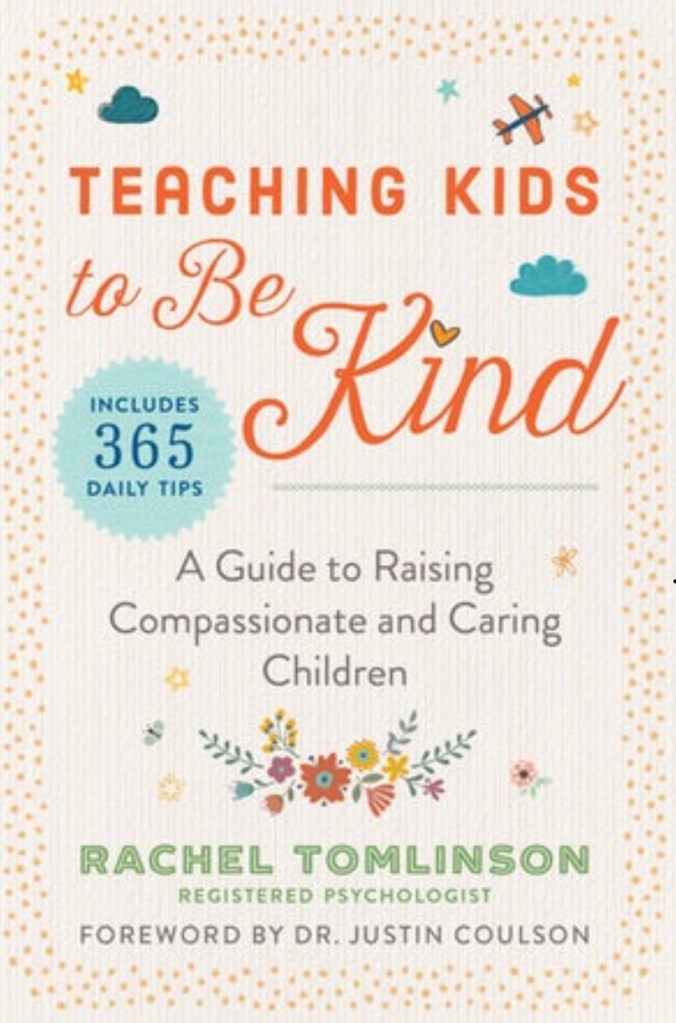
To find more of Rachel’s amazing work and learn how she has helped so many families achieve a better outlook and well being, or to purchase her book, “Teaching Kids to be Kind” – follow the links below:
Website: www.towardwellbeing.com
Book: https://www.towardwellbeing.com/teachingkidstobekind

Bio: Rachel Tomlinson is a registered psychologist who has worked with adults, families, and children (birth through eighteen years old) in a variety of settings. She has presented at national conferences on mental health topics (including trauma and play therapy) as well as guest lectured about domestic violence and relationships at colleges and universities. She also serves as a subject matter expert for journalists on topics such as parenting, child development, and relationships. She resides in Perth, Australia.
 kinder-harmony.com
Leave a comment